Robotic Bronchoscopy

Robotic Bronchoscopy

robotic bronchoscopy - Dr Barton Jennings

When a lung nodule is found on a CT scan, the next step is often determining whether tissue sampling is required.

Robotic bronchoscopy is an advanced diagnostic technique that allows us to reach small or hard-to-access lung nodules with greater precision than traditional bronchoscopy and CT guided biopsy.

At Lung and Sleep, robotic bronchoscopy forms part of our structured approach to lung nodule assessment through our Rapid Assessment Lung Clinic.

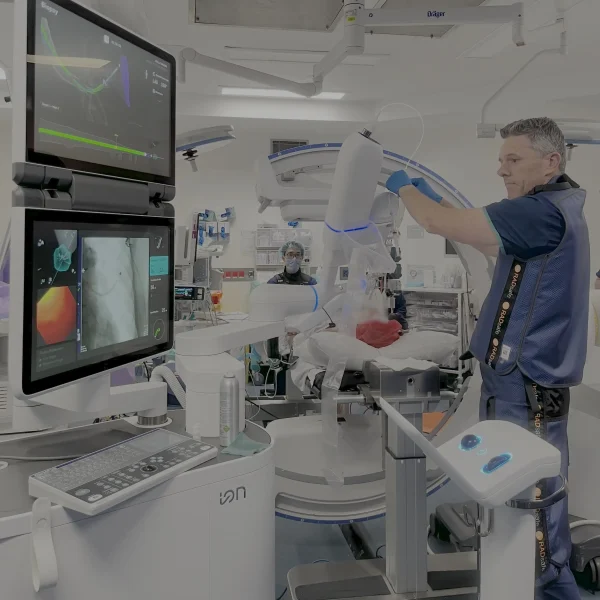
Dr Barton Jennings was among the first and is one of the only specialists in Victoria to perform Robotic Bronchoscopy. As featured on the 7 News.

What is robotic bronchoscopy?

Robotic bronchoscopy is a minimally invasive procedure that uses robotic-assisted navigation to guide a thin bronchoscope deep into the lungs.

This technology improves stability and precision when accessing:

  • Small peripheral lung nodules
  • Lesions located far from the main airways
  • Nodules that may otherwise require surgical biopsy

The goal is accurate tissue diagnosis while minimising the need for more invasive procedures.

Why might I need robotic bronchoscopy?

You may be referred for robotic bronchoscopy if:

  • A lung nodule has been detected on CT scan
  • PET imaging suggests further investigation is required
  • The lesion is small or located in the outer part of the lung
  • A precise diagnosis is needed to guide treatment

Most lung nodules are benign. However, when tissue diagnosis is required, obtaining accurate samples is essential for appropriate management.

How is robotic bronchoscopy different from standard bronchoscopy?

Traditional bronchoscopy works well for central airway lesions.

Robotic-assisted bronchoscopy enhances our ability to:

  • Navigate further into peripheral airways
  • Maintain scope stability
  • Improve access to small lesions
  • Combine with imaging guidance and EBUS when required

This is particularly valuable in the evaluation of early-stage lung cancer and small indeterminate nodules.

What happens during the procedure?

Robotic bronchoscopy is performed under anaesthetic.

During the procedure:

  • A thin flexible camera is passed through the mouth into the lungs
  • Robotic guidance assists with precise navigation
  • Tissue samples (biopsies) are taken
  • EBUS may be performed at the same time to assess lymph nodes

Patients go home the same day.

You may have a mild sore throat or cough afterwards, which usually settles within 24–48 hours.

Is robotic bronchoscopy safe?

Robotic bronchoscopy is considered very safe and minimally invasive.

As with all bronchoscopic procedures, there are small risks such as bleeding or pneumothorax (collapsed lung), but serious complications are uncommon.

We carefully assess each patient to determine whether this is the most appropriate diagnostic approach.

Integrated lung nodule management

Robotic bronchoscopy is not offered in isolation.

We provide a structured diagnostic pathway that includes:

  • Specialist CT scan review
  • Risk assessment
  • PET scan coordination
  • EBUS for mediastinal staging
  • Multidisciplinary team discussion with thoracic surgeons and oncologists

Clear communication with your GP or referring specialist is provided at every step.

Robotic assisted bronchoscopy compared to CT guided biopsy
  • Patients prefer bronchoscopy because they are asleep. CT guided biopsy is distressing
  • Risk of pneumothorax is 1% with Robot compared to 30% with CT guided biopsy
  • Robot can access nodules anywhere
  • Robot can biopsy multiple and bilateral lung nodules
  • CT guided biopsy cannot reach 50% of nodules
When should a GP refer?

Referral may be appropriate if:

  • A pulmonary nodule ≥8–10 mm requires tissue diagnosis
  • A lung nodule increases in size
  • A PET-positive peripheral lesion needs biopsy
  • A ground glass pulmonary nodule which may be adenocarcinoma
Book an appointment

If you have been told your CT scan is abnormal or a lung nodule has been identified, early specialist review is important.

Contact Lung and Sleep to arrange assessment.